Emotions is the second studio album by American singer Mariah Carey, released in the United States on September 17, 1991 by Columbia Records. It is primarily composed of strong ballads and dance music - written by Carey herself, Walter Afanasieff, Clivillés & Cole (of C+C Music Factory), and Carole King. The title track became Carey's fifth consecutive number 1 song on the Billboard Hot 100, making her the first artist to achieve this feat. The album also generated two more top five singles. Contrary to her debut album, Carey wrote and co-produced and musically composed the entire album, providing lyrics for all ten tracks. She was nominated for two Grammy Awards for Producer of the Year and Best Female Pop Vocal Performance. Emotions was eventually certified 4x platinum by the RIAA. As of 2008 it has sold 10 million copies worldwide.
WRITING & RECORDING
With the success of her debut album, Carey and top Sony/Columbia executives such as Tommy Mottola and Don Ienner realized it was time to decide her future plans. Carey was now given permission to produce (which had been denied for most of her first album) and the option to work with producers of her choice. She worked with Walter Afanasieff, Clivilles & Cole (of C+C Music Factory) and Carole King.
PROMOTION & RECEPTION
Emotions did not receive as substantial promotion as Carey's debut album, and Carey once again faced criticism when she refused to go on tour. In the wake of a recent scandal at the time involving Milli Vanilli, critics once again attacked Carey as they believed she was a "studio artist" who was unable to perform live, and that her famous high notes were nothing more than a creation of synthesized instruments in the studio. Carey later said she did not tour because she faced her own insecurities and a general lack of self confidence in performing for an audience. She explained her issues by stating that most artists overcome anxiety during their live performances before they get a record deal, but she did not have the same experience performing live.
The reviews for the album were mixed. Carey was mostly criticized for the abundance of high notes in her vocals on the album, especially those on the title track, where her vocal range is showcased more than on any of her previous songs. More characteristically, Rolling Stone magazine found her singing too showy, writing: "Carey has a remarkable vocal gift, but to date, unfortunately, her singing has been far more impressive than expressive". The album earned two 1992 Grammy Award nominations for Producer of the Year and Best Female Pop Vocal Performance (for "Emotions"), losing in both categories.
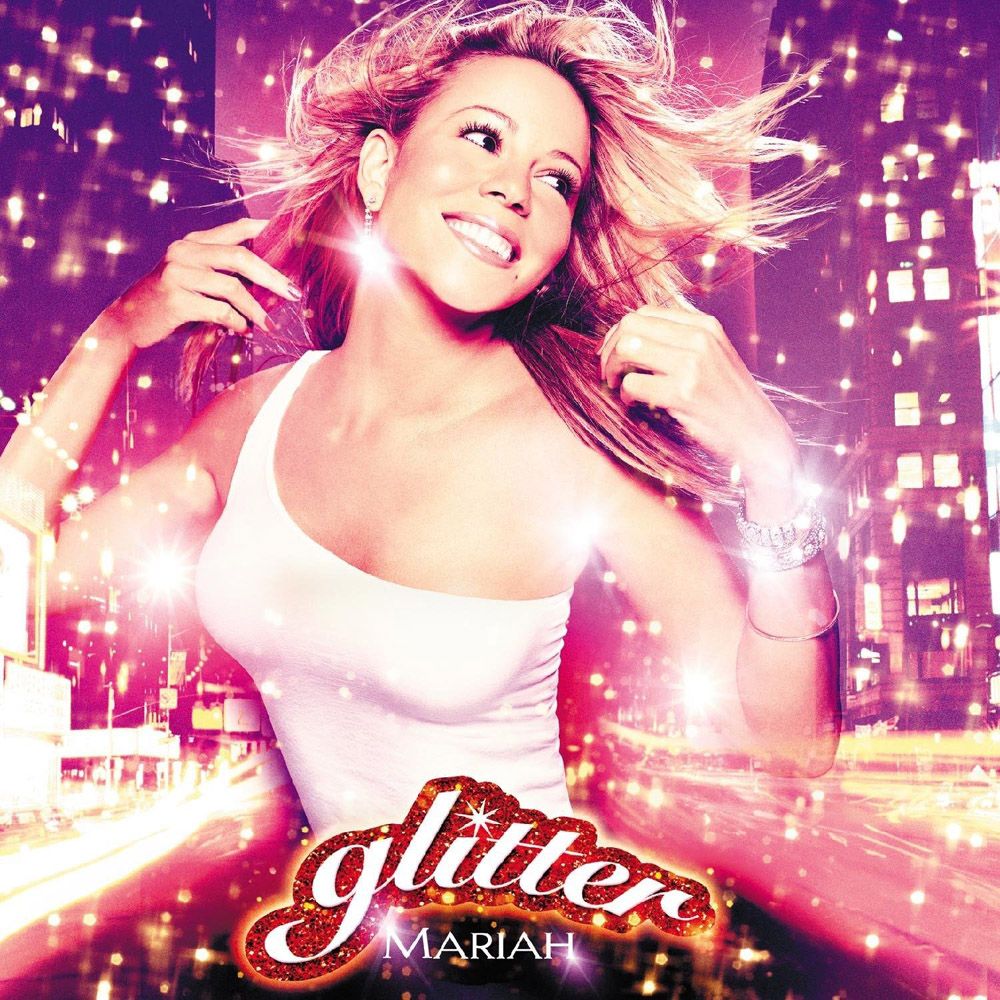
Emotions debuted and peaked at number 4 on the U.S. Billboard 200 with first-week sales of 129,000 copies, which surprised some following the huge success of Mariah Carey. It spent twenty-seven weeks in the top twenty and a total of fifty-five on the Billboard 200. It became the first of four Carey studio albums not top the Billboard 200 and was her lowest-peaking album until Glitter (2001), but it was certified 4x platinum by the RIAA in 1994. Emotions performed better on the chart than her debut in the UK, peaking within the top five and spending four weeks more in the top seventy-five, with a total of forty weeks. The album was a success in Canada and Australia, but as in the U.S. it did not sell as well as Mariah Carey. The album made the Canadian top five and the Australian top ten, and was certified 4x platinum in Canada and 2x platinum in Australia. Carey's success was once again moderate across continental Europe.
The singles from Emotions were not huge hits and, like her debut album, only the lead single was a success outside of the U.S. The first single, "Emotions", became Carey's fifth consecutive number 1 single in the U.S., making her the only act in chart history to have their first five U.S. singles reach the top of the Billboard Hot 100. It also made the top five in Canada, but failed to go beyond the top twenty in the UK and Australia. "Can't Let Go" peaked at number 2 in the U.S., breaking Carey's streak of number 1 singles, and it was a modest hit elsewhere: despite making the Canadian top ten, it barely reached the UK top twenty and missed the Australian top forty altogether. "Make It Happen" peaked at number 5 in the U.S. and became her first single to miss the Canadian top ten, but managed to peak within the UK top twenty and the Australian top forty. A fourth single, "Till the End of Time," was commissioned to radio in Costa Rica and Mexico in an attempt to boost sales of the album. Because the song received minimal airplay, and to make way for the release of the MTV Unplugged EP, it was not given further promotion as a single.
Emotions was certified gold in Switzerland and platinum in the Netherlands and United Kingdom.
PRODUCTION
Produced By: Walter Afanasieff, Mariah Carey, David Cole & Robert Clivillés
Mixed By: Dana Jon Chapelle, Mariah Carey & Bob Rosa
Engineered By: Bruce Calder, Dana Jon Chapelle, Lolly Grodner, Acar S. Key, John Mathias , Bruce Miller, Craig Silvery & M.T. Silvia
Mastered By: Bob Ludwig
Executive Producer: Tommy Mottola
CREDITS
Drums, Percussion: Walter Afansieff, Robert Clivillés, Steve Smith
Bass: Will Lee, Carl James
Synth Bass: Walter Afansieff
Guitars: Vernon "Ice" Black, Cornell Dupree, Michael Landau, Paul Pesco
Guitar Synth: Walter Afanasieff
Keyboards, Piano, Organ, Synthesizers: Walter Afanasieff, David Cole, Ren Klyce
Horns: Louis DelGatto, Lawrence Feldman, Earl Gardner, Keith O'Quinn, George Young
Horns Arranged By Louis DelGatto


|


Album Information: Mariah Carey
Mariah Carey is the self-titled debut album by American singer Mariah Carey, released in the United States on June 12, 1990 by Columbia Records. Although sales were initially slow, it made Carey a star in her home country and yielded four number 1 singles on the Billboard Hot 100, with the album itself spending eleven weeks at the top of the Billboard 200. The RIAA certified Mariah Carey 9x platinum on December 15, 1999, denoting 9 million shipments in the United States. It is Carey's third best-selling album in the U.S. after Daydream (1995) and Music Box (1993). The album has sold an estimated 15 million copies worldwide.
WRITING & RECORDING
Tommy Mottola and other Sony/Columbia executives believed that Carey had high potential to be the next big superstar, so her debut album was carefully co-ordinated by a panel of executives, and as a result it was deemed unwise for Carey and Margulies to produce. Mottola and the committee wanted a debut album with a more contemporary sound (much like Whitney Houston's 1985 debut album Whitney Houston, which many critics called Carey out for making her album too similar to) that would cross over and appeal to both the R&B and mainstream music markets.
The committee enlisted some of the top producers of the time to produce the songs that Margulies and Carey had written, and to produce and co-write new material with Carey herself. The producers included Rhett Lawrence, Ric Wake and Narada Michael Walden, and only six of the nearly twenty songs that Carey and Margulies had written made the album initially.
RECEPTION
In order to raise her profile before the release of Mariah Carey, Carey performed three songs, in front of an invitation-only audience at an intimate soirée. She made her television debut on The Arsenio Hall Show, and Columbia Records arranged for her to perform "America the Beautiful" at the NBA Finals. Carey was also asked to go on tour, but she refused as she suffered from severe stage fright at the time.
Mariah Carey entered the U.S. Billboard 200 at number 80 and entered the top twenty in its fourth week. It reached number 1 in its forty-third week, and stayed there for eleven consecutive weeks - to date, the longest stay at number 1 in Carey's career. It remained in the top twenty for sixty-five weeks and on the Billboard 200 for 113 weeks, and it was certified 9x platinunm by the RIAA on December 15, 1999. It is one of the best-selling debut albums in the country, and by March 2006 it had sold over nine million copies in the U.S. It was also the best-selling album of 1991 in the United States.
Mariah Carey was moderately successful for a debut album outside the U.S. It experienced most success in Canada, where it topped the chart for a week and went 7x platinum. The album peaked at number 6 in the United Kingdom and Australia; in the former country it spent thirty-six weeks in the top seventy-five, and in the latter it went 2x platinum. Its success in Brazil and across continental Europe was limited. As of November 2005, the album had sold approximately 15 million copies worldwide.
The singles released from Mariah Carey were unsuccessful in most music markets but became very popular in the U.S., making Carey a star there. "Vision of Love" became the first of many Billboard Hot 100 number 1 hits for Carey, and topped the charts in Canada and New Zealand. "Love Takes Time" reached number 1 in both the U.S. and Canada, but was only a moderate success in other markets and in some, such as the UK, it failed. "Someday" became another number 1 for Carey in the U.S. but only reached the top five in Canada, and elsewhere it had little impact. "I Don't Wanna Cry" tied Carey with The Jackson 5 as the act to have their first four singles hit number 1 in the U.S., but it had minimal success in other markets except Canada, where it peaked within the top ten. "There's Got to Be a Way" was released in some European countries such as the UK, where it missed the top forty. A fifth single, "Prisoner", was scheduled for release in the U.S. after "I Don't Wanna Cry", but because of the impending release of Carey's second album Emotions, it wasn't released.
Mariah Carey was nominated for the 1991 Grammy Award for Album of the Year, while "Vision of Love" received nominations in the categories of Song of the Year, Record of the Year and Best Female Pop Vocal Performance. Carey won for Best Female Pop Vocal Performance and also received the award for Best New Artist.
WRITING & RECORDING
Tommy Mottola and other Sony/Columbia executives believed that Carey had high potential to be the next big superstar, so her debut album was carefully co-ordinated by a panel of executives, and as a result it was deemed unwise for Carey and Margulies to produce. Mottola and the committee wanted a debut album with a more contemporary sound (much like Whitney Houston's 1985 debut album Whitney Houston, which many critics called Carey out for making her album too similar to) that would cross over and appeal to both the R&B and mainstream music markets.
The committee enlisted some of the top producers of the time to produce the songs that Margulies and Carey had written, and to produce and co-write new material with Carey herself. The producers included Rhett Lawrence, Ric Wake and Narada Michael Walden, and only six of the nearly twenty songs that Carey and Margulies had written made the album initially.
RECEPTION
In order to raise her profile before the release of Mariah Carey, Carey performed three songs, in front of an invitation-only audience at an intimate soirée. She made her television debut on The Arsenio Hall Show, and Columbia Records arranged for her to perform "America the Beautiful" at the NBA Finals. Carey was also asked to go on tour, but she refused as she suffered from severe stage fright at the time.
Mariah Carey entered the U.S. Billboard 200 at number 80 and entered the top twenty in its fourth week. It reached number 1 in its forty-third week, and stayed there for eleven consecutive weeks - to date, the longest stay at number 1 in Carey's career. It remained in the top twenty for sixty-five weeks and on the Billboard 200 for 113 weeks, and it was certified 9x platinunm by the RIAA on December 15, 1999. It is one of the best-selling debut albums in the country, and by March 2006 it had sold over nine million copies in the U.S. It was also the best-selling album of 1991 in the United States.
Mariah Carey was moderately successful for a debut album outside the U.S. It experienced most success in Canada, where it topped the chart for a week and went 7x platinum. The album peaked at number 6 in the United Kingdom and Australia; in the former country it spent thirty-six weeks in the top seventy-five, and in the latter it went 2x platinum. Its success in Brazil and across continental Europe was limited. As of November 2005, the album had sold approximately 15 million copies worldwide.
The singles released from Mariah Carey were unsuccessful in most music markets but became very popular in the U.S., making Carey a star there. "Vision of Love" became the first of many Billboard Hot 100 number 1 hits for Carey, and topped the charts in Canada and New Zealand. "Love Takes Time" reached number 1 in both the U.S. and Canada, but was only a moderate success in other markets and in some, such as the UK, it failed. "Someday" became another number 1 for Carey in the U.S. but only reached the top five in Canada, and elsewhere it had little impact. "I Don't Wanna Cry" tied Carey with The Jackson 5 as the act to have their first four singles hit number 1 in the U.S., but it had minimal success in other markets except Canada, where it peaked within the top ten. "There's Got to Be a Way" was released in some European countries such as the UK, where it missed the top forty. A fifth single, "Prisoner", was scheduled for release in the U.S. after "I Don't Wanna Cry", but because of the impending release of Carey's second album Emotions, it wasn't released.
Mariah Carey was nominated for the 1991 Grammy Award for Album of the Year, while "Vision of Love" received nominations in the categories of Song of the Year, Record of the Year and Best Female Pop Vocal Performance. Carey won for Best Female Pop Vocal Performance and also received the award for Best New Artist.
 MARIAH CAREY June 15, 1990 Columbia Records | TRACKLISTING: Vision Of Love* There's Got To Be A Way* I Don't Wanna Cry* Someday* Vanishing All In Your Mind Alone In Love You Need Me Sent From Up Above Prisoner Love Takes Time* PROFESSIONAL ALBUM REVIEWS ALBUM INFORMATION | ||||||||||||||||||||||||||||||||||||||||||||||||||||||||||||||||||||||||||||||||||||||||||||||||||||||||||||||||||||||||||||||||||||||||||||||||||
| |||||||||||||||||||||||||||||||||||||||||||||||||||||||||||||||||||||||||||||||||||||||||||||||||||||||||||||||||||||||||||||||||||||||||||||||||||


Subscribe to:
Comments (Atom)